

Blockchain Technology
Blockchain technology is one of the most transformative innovations of the 21st century. At its core, it is a distributed ledger system that records transactions across multiple nodes in a secure, permanent, and transparent manner. While initially introduced as the foundational technology behind cryptocurrencies like Bitcoin, its applications today extend far beyond digital money. Blockchain’s decentralized nature eliminates the need for central authorities, reduces fraud, enhances security, and fosters trust. Across industries — from supply chain, healthcare, and government to finance and banking — blockchain is redefining how data and value move.
In simple terms, blockchain is a chain of blocks, with each block holding a list of transactions. Every new block connects to the previous one, forming an unbroken chain secured by cryptographic principles. This design makes it nearly impossible to alter past transactions without altering every subsequent block, giving blockchain its reputation for reliability and immutability.
As we explore this concept further, we will look specifically at how blockchain reshapes banking — an industry historically dependent on centralized ledgers, intermediaries, and legacy infrastructure.
The Core Components of Blockchain Technology
Understanding blockchain requires familiarity with some key components that make it work:
Decentralization
Unlike traditional databases controlled by a single authority, blockchain runs on a network of computers (nodes). Each node has a copy of the entire ledger, meaning no single point of failure exists.
Consensus Mechanisms
To validate transactions and add them to the chain, blockchain uses consensus algorithms such as:
-
Proof of Work (PoW)
-
Proof of Stake (PoS)
-
Delegated Proof of Stake (DPoS)
These mechanisms ensure that all nodes agree on the accuracy of information before recording it.
Cryptographic Security
Every transaction is encrypted and linked to the previous transaction using cryptographic hashing. This creates a chain that is exceptionally difficult to tamper with.
Smart Contracts
Smart contracts are self-executing agreements with terms directly embedded in code. When predetermined conditions are met, they execute automatically without human intervention.
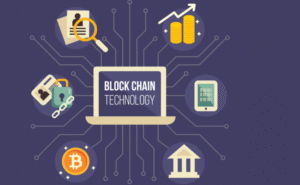
How Blockchain Technology Works: A Simplified View
Imagine a public ledger that everyone can view but no single person controls. When a transaction is made:
-
Transaction Proposal:
The transaction is broadcast to a network of peer-to-peer computers. -
Verification:
Nodes verify the transaction based on predefined rules. -
Block Formation:
Verified transactions are grouped into a block. -
Consensus:
The network uses an algorithm to reach agreement on the new block. -
Recording:
Once approved, the block is added to the chain in a permanent, transparent way.
Why Blockchain Technology Matters Today
Blockchain technology is significant because it solves many trust issues inherent in centralized systems. Some of its core advantages include:
-
Transparency: Anyone on the network can view transaction histories.
-
Security: Cryptographic hashing and decentralization protect data integrity.
-
Efficiency: Eliminates intermediaries, reducing cost and processing time.
-
Traceability: Every transaction can be tracked and audited.
These features make blockchain appealing not just in digital currencies but also in sectors like healthcare, voting systems, identity management, logistics, and especially banking.
Blockchain in Banking: A Contextual Overview
Traditional banking systems have served the world for decades, but they come with limitations:
-
Slow settlement times
-
High operational costs
-
Centralized control
-
Vulnerability to fraud and cyberattacks
Blockchain technology challenges these limitations by offering an innovative alternative. Instead of relying on centralized ledgers controlled by banks, transactions can be processed, verified, and recorded on decentralized ledgers.
Banks have begun experimenting with blockchain to re-engineer back-end processes, improve cross-border payments, and enhance data integrity. Major financial institutions recognize that blockchain isn’t just a technological trend — it is fundamental to future competitiveness.
Key Features of Blockchain That Transform Banking
Secure and Fast Transactions
Blockchain enables near-instantaneous settlement by removing the need for intermediaries. Traditional international payments can take several days; blockchain can reduce this to minutes or seconds.
Reduced Costs
By cutting out middlemen and automating reconciliation through blockchain, banks can significantly lower operational and settlement costs.
Improved Transparency and Auditability
Every transaction recorded on a blockchain is traceable and immutable, which strengthens regulatory compliance and risk management.
Smart Contracts for Automated Workflows
Smart contracts reduce human error and enforce contractual agreements automatically, which is particularly valuable in trade finance and syndicated loan processing.
Use Cases of Blockchain Technology in Banking
Below is a table summarizing how blockchain is transforming banking operations:
| Banking Use Case | Impact of Blockchain | Benefits |
|---|---|---|
| Cross-Border Payments | Real-time settlement | Lower costs, reduced delays |
| Trade Finance | Smart contracts automate workflows | Transparency, reduced paperwork |
| KYC/Identity Verification | Shared identity ledgers | Faster onboarding, reduced duplication |
| Loan Syndication | Distributed ledger coordination | Better transparency for lenders |
| Clearing and Settlement | Instant reconciliation | Reduced risk and cost |
Real-World Examples of Blockchain in Banking
Many global banks are already adopting blockchain or conducting live pilots:
-
RippleNet for Cross-Border Payments:
Ripple’s distributed ledger technology enables faster international transfers with reduced fees compared to SWIFT. -
JPMorgan’s Onyx Platform:
JPMorgan developed its blockchain network for institutional solutions, including tokenized payment systems and interbank settlements. -
HSBC FX Settlement Using DLT:
HSBC has executed live foreign exchange settlements using distributed ledger technology, demonstrating real-time settlement capability.
These examples highlight that blockchain is not hypothetical — major players are already applying it to real business problems, particularly in cross-border and high-volume operations.
Challenges Facing Blockchain Adoption in Banking
Even though the potential is enormous, banks face several barriers:
Regulatory Uncertainty
Different countries have varying regulations regarding digital assets and distributed systems. Compliance frameworks continue to evolve, which makes large-scale adoption cautious and gradual.
Integration with Legacy Systems
Banks rely on decades-old infrastructure. Integrating blockchain with existing systems requires substantial investment, training, and architectural redesign.
Scalability Concerns
Public blockchains like Bitcoin and Ethereum have faced scalability challenges, especially under high transaction volumes. Banks require systems that can handle large throughput at low cost.
Skill Gaps
Blockchain expertise is still concentrated among a limited pool of professionals. Banks must invest in talent and training.
Despite these hurdles, the industry’s long-term view remains optimistic.
The Future of Blockchain Technology in Banking
The future of blockchain technology in banking is not about replacing existing systems entirely; it is about reimagining how financial infrastructure works. Several major trends will shape this evolution:
1. Central Bank Digital Currencies (CBDCs)
Central banks worldwide are exploring their own digital currencies built on blockchain or DLT (Distributed Ledger Technology). CBDCs offer:
-
Faster settlement
-
Increased financial inclusion
-
Reduced cash handling costs
-
Enhanced monetary policy tools
If widely adopted, CBDCs could redefine how money moves between citizens, banks, and governments.
2. Tokenization of Assets
Tokenization refers to converting rights to an asset into a digital token on a blockchain. In banking, this includes:
-
Tokenized securities
-
Real estate titles
-
Commodities
Benefits include fractional ownership, improved liquidity, and easier transferability.
3. Interbank Blockchain Networks
Banks are collaborating to build shared blockchain networks that:
-
Simplify data sharing
-
Reduce reconciliation errors
-
Speed up settlement cycles
Examples include consortiums like R3’s Corda Network.
4. Real-Time Payments and Settlements
Blockchain enables near-instantaneous reconciliation for payments, reducing the multi-day settlement cycles typical of traditional banking.
As real-time demand grows — especially in international markets — blockchain will play a central role in enabling seamless movement of value.
5. Enhanced Security and Fraud Prevention
Blockchain’s decentralized and cryptographic design strengthens defenses against fraud, tampering, and unauthorized access. Banks will increasingly use blockchain-based identity verification and transaction validation.
Blockchain Vs. Traditional Banking Systems: A Comparison
| Feature | Traditional Banking | Blockchain-Enabled System |
|---|---|---|
| Ledger Control | Centralized | Decentralized |
| Settlement Time | Hours to Days | Seconds to Minutes |
| Fraud Risk | Moderate to High | Lower due to encryption |
| Intermediaries | Required | Not required |
| Transparency | Limited | High |
| Costs | Higher due to overhead and reconciliation | Lower due to automation |
Regulatory Landscape for Blockchain in Banking
Regulation plays a critical role in how blockchain technology integrates with banking. Governments and financial authorities are walking a fine line: they want to encourage innovation while protecting consumers and financial stability.
Key regulatory areas include:
-
Anti-Money Laundering (AML) and Know Your Customer (KYC) compliance
-
Digital asset custodial rules
-
Cross-border regulatory cooperation
-
Reporting and transparency standards for blockchain transactions
Countries that adopt clear frameworks tend to see faster blockchain adoption among banks because uncertainties are reduced.
Blockchain’s Impact on Financial Inclusion
Blockchain technology has the potential to bring financial services to populations that are currently unbanked or underbanked. Because blockchain systems can operate with minimal infrastructure and low fees, they can reach remote or economically disadvantaged regions.
This means:
-
People without traditional bank access can store value securely
-
Digital identity systems can reduce barriers to entry
-
Micro-transactions and remittance services become more affordable
In this sense, blockchain could play a humanitarian role as much as an economic one.
Security and Ethical Considerations
While blockchain improves security in many areas, it’s not perfect. Some challenges remain:
51% Attacks
If one party controls more than half of a blockchain network’s computing power, they could theoretically alter transaction history.
Private Key Vulnerability
Users must safeguard private keys. If lost or stolen, they can lead to irreversible loss of assets or access.
Ethical Use of Data
As blockchains grow, ethical questions arise about transparency versus privacy. Public blockchains cannot erase data, so sensitive information must be handled carefully.
Regardless, banks and institutions are actively developing best practices to mitigate these risks.
Future Scenarios: Banking in 2030 and Beyond
The next decade will likely see a shift from experimental blockchain use cases to routine operations powered by distributed ledgers. Possible futures include:
Digital Wallet Ecosystems
Consumers may hold multiple assets — fiat, CBDCs, tokenized securities — in a single blockchain wallet.
Decentralized Finance (DeFi) Integration
Traditional banks may partner with or adopt decentralized finance models to offer lending, yield-earning, and automated financial products.
Global Settlement Networks
Cross-border payments may move to borderless settlement systems built on shared blockchain protocols, reducing reliance on legacy messaging systems.
As these scenarios unfold, banking will become more interoperable, transparent, and customer-centric.

Frequently Asked Questions (FAQs)
What is the primary purpose of blockchain technology?
Blockchain technology aims to create a secure, transparent, and decentralized method of recording and verifying transactions without relying on a single governing authority.
How does blockchain improve banking operations?
Blockchain can improve banking through faster settlements, lower costs, increased transparency, improved security against fraud, and automation via smart contracts.
Are banks replacing traditional systems with blockchain entirely?
Not entirely. Most banks are adopting hybrid models that combine blockchain with existing infrastructure for specific use cases such as cross-border payments and digital asset services.
What role do regulations play in blockchain adoption?
Regulations provide guidelines that protect consumers and financial systems. Clear regulatory frameworks help accelerate adoption by reducing uncertainty for banks and customers.
Can blockchain operate without central authorities?
Yes, public blockchains can operate independently through decentralized consensus mechanisms. Private or consortium blockchains still use decentralized principles but may have permissioned access.
Conclusion: The Future of Blockchain Technology in Banking
Blockchain technology is fundamentally reshaping how financial systems function, and its impact on banking is already visible today. From improving cross-border payment systems to enabling faster settlement cycles, blockchain offers a decentralized, secure, and more efficient alternative to traditional banking infrastructure. As financial institutions continue to explore practical applications, the future of blockchain technology in banking looks promising and transformative.
Banks embracing blockchain are better positioned to reduce operational costs, enhance security, comply with evolving regulations, and offer innovative customer experiences. Decentralized ledgers and smart contracts reduce friction, automate processes, and minimize dependency on intermediaries. As global collaboration expands, blockchain will increasingly support seamless interoperability between institutions, countries, and digital economies.
Regulatory clarity, greater talent development, and continued investment will accelerate blockchain’s integration. While challenges remain — such as scalability and privacy concerns — the progress achieved so far suggests that blockchain will be a cornerstone of banking systems in the near future. In the decade ahead, banks that strategically implement blockchain solutions will lead the transformation toward a more transparent, resilient, and inclusive global financial ecosystem.